Raw feeding a puppy safely
Raw feeding a growing puppy is harder to get right than raw feeding an adult dog, and the consequences of getting it wrong land on a developing skeleton. This page covers the portioning, the split, the part that actually matters, and where the evidence is weaker than the internet suggests.
Start with the honest bit
The percentage bands used across raw feeding are consensus rather than research. They appear consistently across published raw-feeding guides, but they are not a finding from peer-reviewed veterinary literature the way energy requirements are.
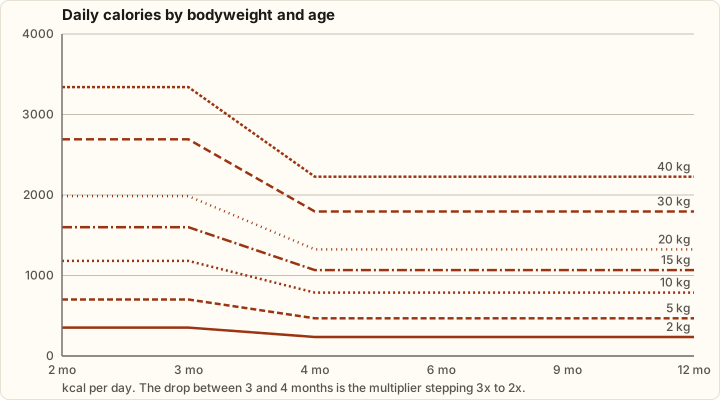
The energy formulas from the Merck Veterinary Manual rest on a much stronger base. Percentages persist because raw ingredients rarely carry a calorie label, not because they are better founded. If you can work out what you are feeding in calories, that is the more defensible route.
Daily portion by age
As a share of current bodyweight, not adult weight:
| Age | Percentage of bodyweight per day |
|---|---|
| Under 4 months | 8 to 10% |
| 4 to 6 months | 6 to 8% |
| 6 to 12 months | 4 to 6% |
| 12 months and over | 2 to 3% |
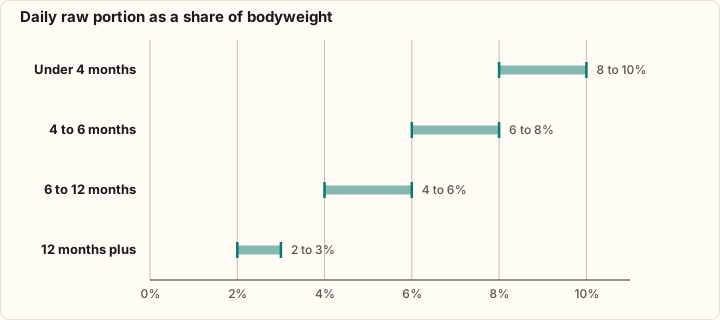
The critical detail is that this tracks today’s weight. A 10 kg puppy at three months eats around 900 g a day; the same puppy at 14 kg two months later eats a different amount under a different percentage. Recalculate every couple of weeks with the raw food calculator.
The 80/10/10 split
| Component | Share | What counts |
|---|---|---|
| Muscle meat | 80% | Including heart and gizzard |
| Raw edible bone | 10% | Soft enough to eat and digest |
| Secreting organ | 10% | At least half of it liver |
The most common mistake: heart and gizzard are organs anatomically, but they count as muscle meat here. Only secreting organs such as liver, kidney and spleen belong in the ten percent. Counting heart as organ leaves a diet badly short on the nutrients liver provides.
The part that actually matters: calcium
For a growing puppy, the bone percentage is not a rounding detail. Bone is the calcium source, and calcium balance during growth is the thing that can cause lasting harm.
Puppies from weaning to about six months absorb calcium passively and cannot down-regulate when intake is high. Too much is as damaging as too little, and the puppy has no physiological brake.
For large and giant breeds this is the single biggest reason to plan a raw diet with a vet or a qualified veterinary nutritionist rather than improvise. There is more on why in calcium and large breed puppies.
Bone safety
- Never cooked. Cooking makes bone brittle and prone to splintering. This applies to any dog, any age, always.
- Size it to the puppy. Raw edible bone means bone soft enough to be eaten, such as chicken wings or necks for a small dog.
- Avoid weight-bearing bones from large animals. They are dense enough to fracture teeth.
- Supervise, particularly with a puppy still learning what to do with a bone.
Practical handling
Raw diets carry a genuine food safety dimension for the household, not just the dog:
- Treat raw pet food exactly like raw meat for people. Separate boards, thorough handwashing, proper fridge storage.
- Clean bowls after every meal rather than topping up.
- Take extra care in households with young children, elderly people, or anyone immunocompromised.
- Thaw in the fridge, not on the counter.
Meals per day
Same schedule as any other food, because splitting meals is about digestion and blood sugar rather than what the food is made of:
- Under 12 weeks: four meals
- 12 weeks to 6 months: three meals
- 6 months onwards: two meals, with toy breeds staying on three for longer
Do I need supplements?
A properly balanced raw diet including bone and organ should not need a calcium supplement, and adding one is actively risky for a large breed puppy.
Whether anything else is needed depends entirely on what you are actually feeding, which is a question for someone who can see your recipe. That is a real recommendation rather than a liability sentence: recipe review is the single most useful thing a nutritionist does for raw feeders.
Transitioning
If you are moving a puppy onto raw, do it gradually over about a week rather than overnight, and introduce one protein at a time so any reaction is traceable. Loose stools during a transition are common; blood, persistent diarrhoea, or lethargy are not, and warrant a call to your vet.
When raw is not the right call
Be honest with yourself about a few situations:
- A puppy that is already unwell, or has a digestive condition, needs a vet’s plan.
- A household that cannot handle raw meat safely, particularly with vulnerable people in it.
- A large or giant breed where you are not prepared to have the recipe reviewed.
- Not enough time to recalculate as the puppy grows, since the portion changes constantly.
None of these mean raw feeding is wrong in general. They mean the failure modes are real and worth planning around rather than discovering.
The short version
Portion by current weight, split 80/10/10 with heart counted as muscle, never cook the bone, and get the calcium balance reviewed by someone qualified if your puppy will be big.
Related guides
- Calcium and large breed puppies Why large breed puppy food caps calcium, the AAFCO limits, and why supplementing a complete food is harmful rather than wasteful. Read before you buy.
- How much to feed a puppy, by age and weight The veterinary formula behind puppy portions, why the amount drops at four months, and how to convert calories to cups. Work out your portions now.
- Switching from puppy food to adult food When to make the switch by size, how to transition over a week, and why timing it to growth beats timing it to a birthday. Plan the switch now.
Calculators for this
References
Every figure on this page comes from one of these. Full details, including what each source is used for, are on our sources page.