Puppy deworming schedule
This page gives timing only. We do not publish worming doses, and we will not. The correct dose depends on the exact product, its concentration, your puppy’s weight on the day, and what else it is taking. A decimal error on a small puppy causes real harm, and no disclaimer makes that safe to automate. Your vet does this calculation.
The schedule
Following Companion Animal Parasite Council guidance:
| Age | Frequency |
|---|---|
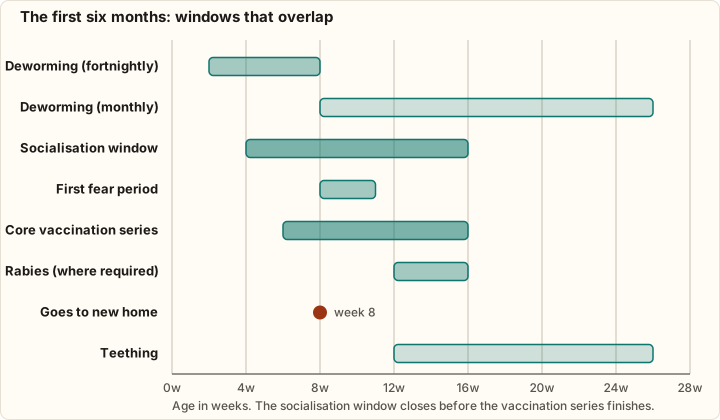
| 2, 4, 6 and 8 weeks | Every two weeks |
| 2 to 6 months | Monthly |
| Over 6 months | Every three months, lifelong |
CAPC also recommends at least four faecal examinations in the first year, beginning at the first veterinary visit. Worming on a schedule and testing are complements rather than alternatives: the schedule handles what is predictable, testing catches what is not.
Why so early, and so often?
Because a large proportion of puppies are born with worms, or acquire them within days.
Roundworm larvae can pass from the mother to the puppies before birth, across the placenta, and afterwards through her milk. This means a puppy can be carrying a significant burden at two weeks old, before it has been anywhere or eaten anything unusual.
A single treatment kills the worms present at that moment but not larvae still migrating through tissue. That is why the early treatments are repeated fortnightly rather than given once: each round catches the next wave as it arrives in the gut.
What worming covers
Broad-spectrum products typically target roundworms, hookworms and whipworms. Tapeworm often needs a different product, and is usually linked to fleas, since dogs acquire the common tapeworm by swallowing an infected flea while grooming.
That connection matters practically: treating tapeworm without dealing with fleas tends to mean it comes back.
Heartworm is a separate matter again, with its own preventive regime that depends heavily on where you live. Ask your vet.
Why this is a human health issue too
Worth stating plainly rather than burying. Roundworm eggs shed in dog faeces can infect people, and children are at highest risk because of hand-to-mouth contact and play in soil or sand.
This is a major reason paediatric-adjacent hygiene advice and puppy worming advice line up:
- Pick up faeces promptly, every time.
- Wash hands after handling a puppy, especially children’s hands before eating.
- Cover sandpits when not in use.
- Keep on the worming schedule rather than treating only when something is visible.
Signs of worms
Common but not universal, and a puppy can carry a meaningful burden while looking well:
- Visible worms in faeces or vomit, sometimes rice-like segments near the tail for tapeworm
- A pot-bellied appearance, particularly in a young puppy
- Poor weight gain, or a dull coat
- Diarrhoea, sometimes with blood or mucus
- Scooting, though this is more often anal glands than worms
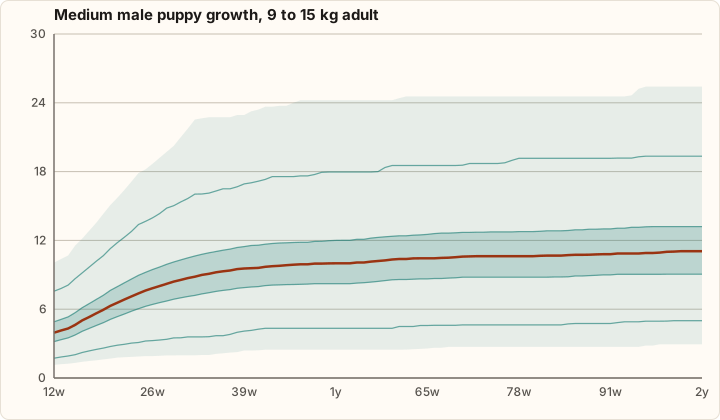
Poor weight gain is worth taking seriously and is one of the things a growth chart makes visible early. A puppy dropping across centile lines deserves a faecal test among other checks.
Why we do not publish a dose calculator
Competitors do. We have decided not to, permanently, and the reasoning is worth being open about:
- Products differ enormously in concentration. The same active ingredient at different strengths needs completely different volumes.
- Weight changes weekly in a growing puppy, so a dose calculated a fortnight ago is already wrong.
- Small puppies have no margin. A tenfold error on a 2 kg puppy is not recoverable.
- Some products are unsafe for certain breeds or ages, which a calculator cannot know.
A worming schedule is useful information. A worming dose is a veterinary calculation. We publish the first and decline the second, and our disclaimer sets out the same position for medication generally.
What to bring to your vet
- Dates of any worming already done, including by the breeder or shelter
- The current weight, which they will take anyway but which helps you follow along
- A faecal sample if one has been requested
- Any symptoms, and when they started
The short version
Every two weeks from two weeks to eight, then monthly to six months, then quarterly for life, with faecal testing alongside. Get the dose from your vet, not from a website.
Related guides
- Puppy vaccination schedule The AAHA core vaccination timeline from 6 weeks, why the series runs past 16 weeks, and how it collides with socialisation. See the schedule.
- The puppy socialisation window Why 4 to 16 weeks shapes a dog for life, how to socialise before vaccinations finish, and what to do if you started late. Check your puppy's window.
- Puppy age in weeks vs months, and dog years Why weeks matter more than months for a puppy, how to convert without drifting, and what dog years really mean. Convert your puppy's age now.
Calculators for this
References
Every figure on this page comes from one of these. Full details, including what each source is used for, are on our sources page.
- Companion Animal Parasite Council. Guidelines for the diagnosis, treatment and control of internal parasites in dogs.
- American Animal Hospital Association. 2022 AAHA Canine Vaccination Guidelines (2024 update).
- Merck Veterinary Manual. Nutritional Requirements of Small Animals. Management and Nutrition.