Puppy teething timeline
Puppies grow two complete sets of teeth in their first seven months. Knowing the timings helps with the chewing, and it is also how vets estimate the age of a puppy nobody has papers for.
The numbers
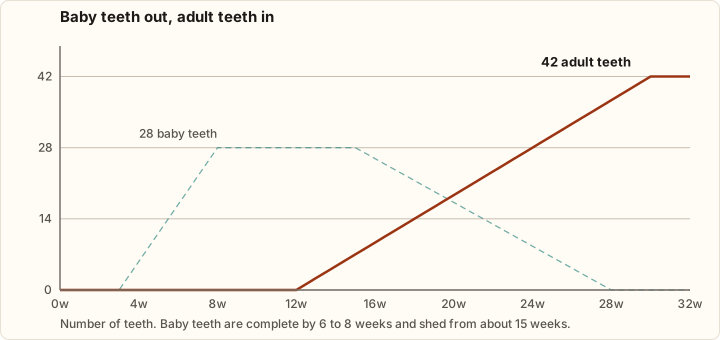
- 28 deciduous (baby) teeth: 12 incisors, 4 canines, 12 premolars. No molars.
- Up to 42 permanent teeth, adding molars to the set.
Baby teeth have no molars at all, which is one of the quickest ways to tell where a puppy is in the process.
Baby teeth arriving
| Teeth | Typically erupt |
|---|---|
| Incisors | 3 to 4 weeks |
| Canines | 3 to 5 weeks |
| Premolars | 4 to 6 weeks |
| Full set of 28 | by 6 to 8 weeks |
Almost all of this happens at the breeder. By the time a puppy goes home at eight weeks it usually has a complete set of very sharp baby teeth, which is what makes puppy mouthing hurt as much as it does.
Baby teeth leaving, adult teeth arriving
| Teeth | Typically erupt |
|---|---|
| Baby teeth start falling out | 3.5 to 5 months |
| Permanent incisors | from about 3 months, last pair around 5 months |
| Permanent canines | 4 to 6 months |
| Permanent premolars and molars | 4 to 7 months |
| Teething largely finished | about 6 months |
Most owners never find a single baby tooth. Puppies usually swallow them, which is harmless. A little blood on a chew toy during this period is normal.
What to expect behaviourally
Chewing peaks through this stage, and it is not naughtiness. Sore gums drive it, and the urge is genuinely difficult for a puppy to override.
What helps:
- Appropriate chew items, in a variety of textures.
- Something cool. A damp flannel frozen for an hour is free and effective.
- Management over correction. Move the shoes rather than teaching a teething puppy not to want them.
- Redirection, calmly and every single time, rather than punishment.
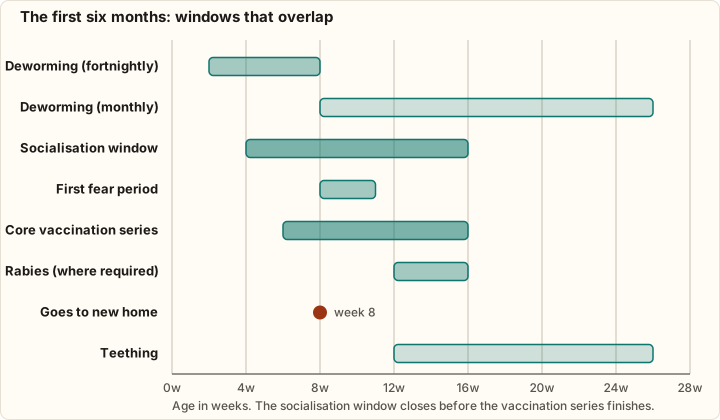
The development timeline shows teething alongside the other stages happening at the same age, which is often the more useful picture.
The check to make at seven months
Retained baby teeth. Occasionally a baby tooth does not fall out and the adult tooth erupts alongside it, most often the canines. You end up with a double tooth.
This matters because it crowds the mouth, traps food and debris, and can push the adult tooth into the wrong position. It is a common reason for a small extraction, and your vet will check for it at a routine appointment.
Worth a look yourself at around seven months: if you can see two canines side by side on the same spot, mention it.
Estimating age from teeth
This is why the timeline is genuinely useful for rescue puppies:
- All baby teeth, no molars: somewhere between about 8 weeks and 4 months.
- Mix of baby and adult teeth: roughly 4 to 6 months.
- Full adult set including molars: 7 months or older.
Vets do this considerably more precisely, and it is the single best reason to ask for an age estimate at a first appointment if the history is uncertain. An accurate age improves everything downstream, from vaccination timing to growth predictions.
When to call a vet
- Retained baby teeth at seven months or later.
- Persistent bad breath, which is not normal in a young dog.
- Bleeding beyond the odd spot, or obvious pain when eating.
- A broken tooth. Fractured teeth are painful and can abscess.
- Adult teeth erupting in the wrong position, or a bite that looks misaligned.
Does teething affect anything else?
Appetite can dip for a few days while gums are sore, which is usually nothing. A puppy that goes off food for more than a day, or is lethargic with it, is a different matter and worth a call.
Some puppies are also noticeably more irritable during this period. It passes.
The short version
Twenty-eight baby teeth in by eight weeks, out from three and a half months, forty-two adult teeth in by about seven. Give appropriate things to chew, and check the canines at seven months.
Related guides
- Puppy age in weeks vs months, and dog years Why weeks matter more than months for a puppy, how to convert without drifting, and what dog years really mean. Convert your puppy's age now.
- The puppy socialisation window Why 4 to 16 weeks shapes a dog for life, how to socialise before vaccinations finish, and what to do if you started late. Check your puppy's window.
- How much sleep do puppies need? Why puppies sleep 18 to 20 hours a day, how to spot an overtired puppy, and why more exercise usually makes it worse. Check the hours by age.
Calculators for this
References
Every figure on this page comes from one of these. Full details, including what each source is used for, are on our sources page.