Puppy water intake calculator
A rough expectation of how much your puppy should drink in a day, adjusted for whether it eats dry or wet food. This is a number to help you notice a change, not a target to hit, and never a reason to ration water.
How much water should your puppy drink?
Expected daily water intake
—
How to use the calculator
- Enter the current weight. Intake scales with bodyweight, so this is the only figure the calculation needs.
- Say what your puppy eats. Wet, raw and fresh diets are mostly water, so a puppy on one drinks noticeably less from the bowl. That is normal.
- Treat the answer as an expectation, not a target. Never restrict water to hit a number. The figure is there to help you notice a change, not to ration.
- Watch for changes rather than absolutes. A sudden increase, especially with more urinating, is the thing worth a vet visit.
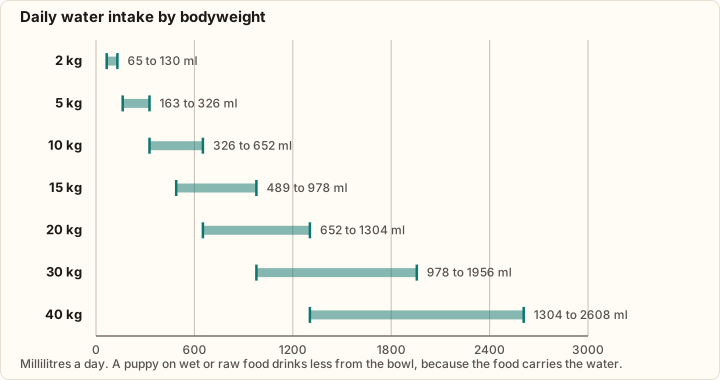
What each value means
- The daily range
- Total water for a whole day, from every source in the bowl. It is a range rather than a target because real intake moves with the weather, how much the puppy has been running about, and what it has been eating. Anywhere inside the range is normal, and so is a day either side of it.
- The low end
- Roughly half a fluid ounce per pound of bodyweight. A puppy sitting near here on a cool, quiet day on wet food is not under-drinking.
- The high end
- Roughly one fluid ounce per pound. Hot weather, hard play and a dry kibble diet all push a normal puppy towards this end and sometimes past it.
- The diet note
- Wet and raw diets are mostly water, so a puppy eating one takes much of its intake with its food and drinks visibly less from the bowl. This is the single most common reason a healthy puppy looks like it is drinking too little.
- What the figure is not
- It is not a limit to ration to, and not a quota to make your puppy meet. Water should be available at all times. The number is here so you can recognise a real change, which is what actually matters clinically.
Example calculations
Three puppies through the same conversion the calculator makes, in millilitres, fluid ounces and cups, because bowls do not come with a scale on the side.
A 3 kg puppy
3 kg · dry food
98 to 196 ml a day
- 3 to 7 fl oz
- About 0.4 to 0.8 cups
- On wet or raw food, expect noticeably less from the bowl
A small puppy on kibble. A whole day comes to under 1 cup, which is why a bowl that looks barely touched at teatime is not by itself evidence of a problem.
A 10 kg puppy
10 kg · dry food
326 to 652 ml a day
- 11 to 22 fl oz
- About 1.4 to 2.8 cups
- On wet or raw food, expect noticeably less from the bowl
The middle of the range. Worth measuring once with a jug rather than eyeballing the bowl, because most people are surprised in one direction or the other.
A 25 kg puppy
25 kg · dry food
815 to 1630 ml a day
- 28 to 55 fl oz
- About 3.4 to 6.9 cups
- On wet or raw food, expect noticeably less from the bowl
A large adolescent. The top of the range here is 1.6 litres a day, so a bowl needs refilling more than once whatever the weather is doing.
Reference values
| Weight | Millilitres a day | Fluid ounces a day |
|---|---|---|
| 1 kg | 33 to 65 ml | 1 to 2 fl oz |
| 2 kg | 65 to 130 ml | 2 to 4 fl oz |
| 5 kg | 163 to 326 ml | 6 to 11 fl oz |
| 10 kg | 326 to 652 ml | 11 to 22 fl oz |
| 15 kg | 489 to 978 ml | 17 to 33 fl oz |
| 20 kg | 652 to 1304 ml | 22 to 44 fl oz |
| 30 kg | 978 to 1956 ml | 33 to 66 fl oz |
| 40 kg | 1304 to 2608 ml | 44 to 88 fl oz |
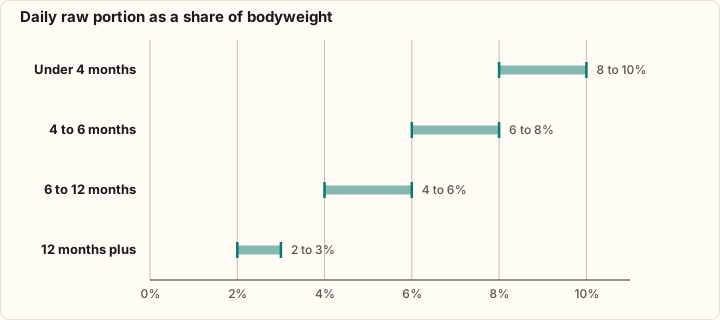
A puppy on wet, raw or fresh food will drink noticeably less than this from the bowl, because those diets are mostly water. That is normal. If you feed raw, the puppy raw food calculator works out the daily amount by weight.
When to call a vet
Contact your vet if your puppy:
- has a sustained increase in drinking, especially alongside more urinating;
- starts having accidents after being reliably house-trained;
- stops drinking, or has dry or tacky gums;
- is drinking heavily and also losing weight;
- is vomiting or has diarrhoea, which dehydrates a young puppy quickly.
Excessive thirst is a recognised early sign of several conditions. It is the pattern over days, not any single thirsty afternoon, that matters.
Accuracy and limits
This is one of the rougher tools on the site, and it is worth saying so. Water intake is genuinely variable: weather, exercise, diet, and even a salty treat move it around. The guidance of half to one fluid ounce per pound per day is a widely used veterinary rule of thumb rather than a precise physiological requirement.
Use it to spot a change, not to manage a number. And never restrict water to bring a puppy inside the range. For the food side of the same routine, use the puppy feeding calculator.
Frequently asked questions
How much water should a puppy drink a day?
Roughly half a fluid ounce to one fluid ounce per pound of bodyweight per day, which works out around 30 to 60 ml per kilogram.
A 10 kg puppy would typically drink somewhere between about 325 and 650 ml. The range is wide because intake genuinely varies with weather, activity and what the puppy has eaten.
My puppy drinks less than this. Is that a problem?
Usually not, and the most common explanation is diet. Wet, raw and fresh foods are mostly water, so a puppy eating one gets a large share of its intake from meals and drinks much less from the bowl.
A puppy on dry kibble that is drinking well below the range, and is also lethargic or has dry gums, is worth a call to your vet.
My puppy drinks a lot. Should I worry?
Occasional heavy drinking after exercise, in hot weather, or after a salty treat is normal.
What warrants a vet visit is a sustained increase, particularly when it comes with more urinating, accidents from a previously house-trained puppy, or weight loss. Excessive thirst is a recognised early sign of several conditions, and it is the pattern rather than any single day that matters.
Should I limit water overnight for house-training?
Talk to your vet before restricting water at all. Many trainers suggest lifting the bowl a couple of hours before bed for an older puppy, but blanket restriction is risky for very young or small puppies who dehydrate quickly.
Never restrict water during the day, in hot weather, or for a puppy that is unwell.
How do I tell if my puppy is dehydrated?
Common signs are tacky or dry gums, reduced skin elasticity when gently lifted at the scruff, sunken-looking eyes, and lethargy.
Dehydration in a young puppy can progress quickly and is a reason to contact a vet rather than to watch and wait, particularly alongside vomiting or diarrhoea.
Does a puppy need more water than an adult dog?
Proportionally, yes, and they tend to drink smaller amounts more often. Puppies have a higher metabolic rate and less capacity to concentrate their urine, so they lose water faster.
That is also why access matters more than volume: fresh water should be available at all times rather than offered on a schedule.
Related calculators
References
Every figure on this page comes from one of these. Full details, including what each source is used for, are on our sources page.